
Alpinisation
Contradictions within contradictions — an outsider's view of a mountain world.

Yesterday I visited a slaughterhouse for the first time.
Not for leisure or for necessity, but because the film I’m currently working on—Fexer—needed a counterweight. I wrote about it here.
The last time I filmed with the Rominger’s, they were setting up fences on the pasture for when the goats begin grazing. It was a picture-postcard kind of day. Europe was experiencing a heatwave, which made 1800 metres feel like paradise, for once.
Flowers I have never seen before were bursting forth from the meadows with defiance, celebratory after another punishing sub-arctic winter.
“How often do you look at the clouds?” Roger queries.
“Not very often.” I admitted, as we lay on the grass looking upwards.
“When do you take the goats to slaughter?” I ask, changing gears.
“Already next week…” He answers.
I’m often careful to know the boundaries of who I’m filming with, especially when the topic is sensitive. This family may be farmers, but they love their goats in a way that feels like an extension of family.
After months of filming and spending time developing our relationship, they understood the necessity. The idyllic and romanticised alpine life is not the full picture. If the story were to be told, it needed to depict all facets.
This is a place of contrast, tension, friction. Here, billionaires are neighboured with farmers. One house contains an underground cinema, another hangs deer and chamois skulls from the stone wall. One inhabitant chases economic domination while another attempts to keep a marginalised language alive.
German, Romansh, Italian, English, Portuguese—all spoken within the same villages, often by the same people. A melting pot, a strange coexistence.
Here, the boundaries are thin in a way that feels almost absurd. People resist easy definitions. A local businessman can switch from hustling capitalist to alpine hunter—and disappear for two weeks in search of wild creatures with few modern conveniences. People are not as they appear. Contradictions exist within contradictions. I suppose this is true of most places, but here it feels more vivid, apparent.
The footage is graphic. I didn’t expect to see what I saw—the door wide open, a cow’s throat slashed, blood pouring.
“When I see this, I understand why people are vegan…” He shares.
Since I’ve been here, I’ve tried to develop more of an understanding of people whose lives are so different from my own. I don’t eat meat or dairy and probably never will again. Yet, their relationship to pastoralism is almost religious.
Last week, I picked up a gift from the Coretti’s—another family that I’ve been filming with. His father makes leather belts in the classic alpine style, adorned with silver-nickel emblems of alpine culture. It was offered as a gesture, since I’ve been filming with them, taking interest in their lives, spending time. It means a lot. But I can’t help but think of what I saw.
How can the two exist together? Such clearly sentimental offerings, such brutal acts. Helping a mother birth a calf and then sending it to this dark place.
But the world is full of these contradictions, we all are, and most of us who act above it are so well insulated that we can pretend otherwise.
I can smell the leather from my belt. Adorned with silver-nickel cows, no less.
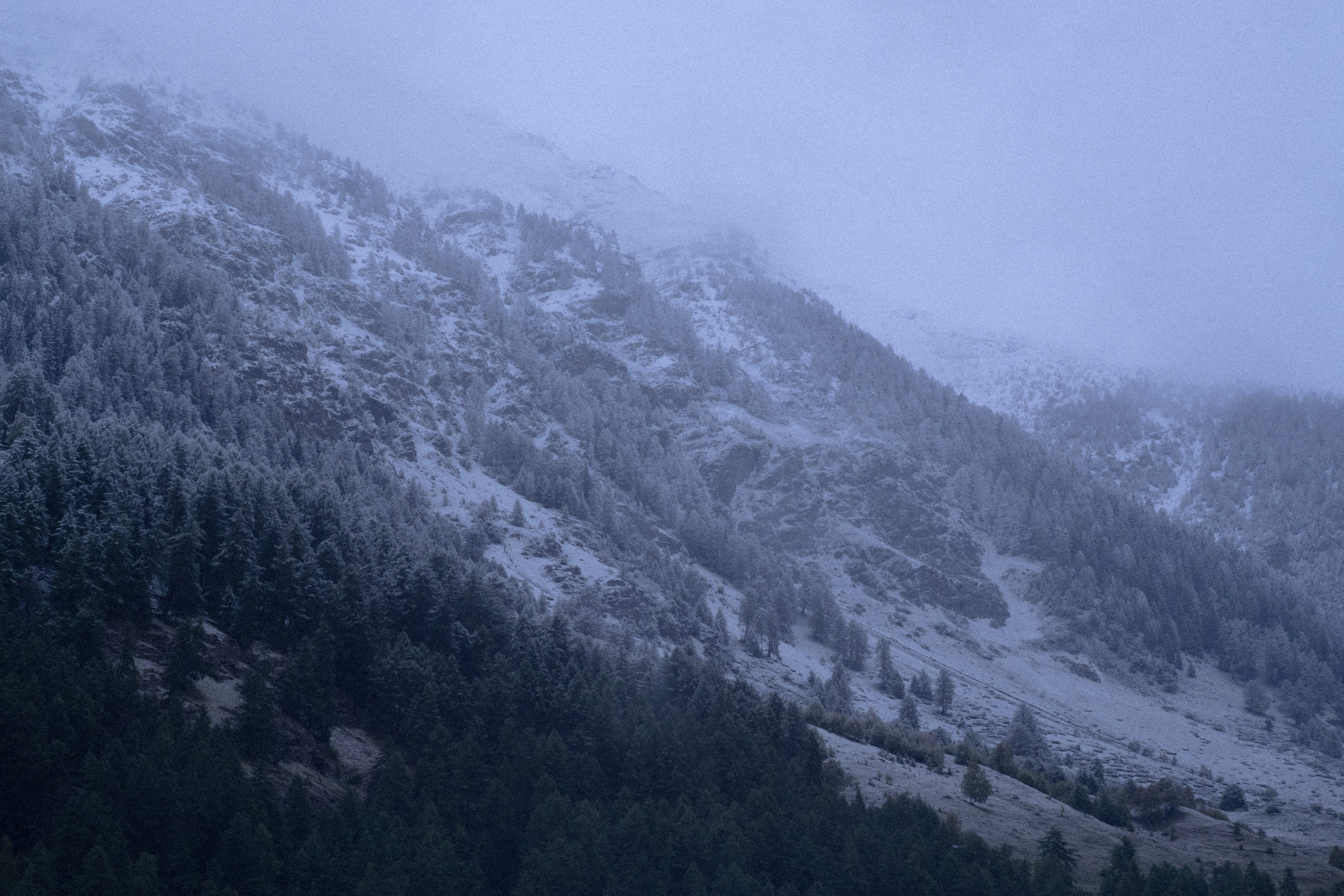
It is this shock of dualities and trialites that we need more often in our lives to question us in it.
The contrasts of this post are all too real. I understand they are a fact of life, but I imagine it would be hard to witness a slaughterhouse. I'm not sure I could bring myself to see that. But I also realize this is the way of the world. I appreciate your realistic approach to the different ways of life.