
Allure
On the magnetism of the uncorrupted.

What is the magnetism that draws us in to those faraway places and the people who inhabit them?
I’ve seen filmmakers who travel to Mongolia to “capture” the nomadic eagle hunters, and the word reveals much. One seeks what one is missing, the need to capture is itself the measure of loss. For the nomadic tribesman, whose stories pass down orally through the generations and stay within their culture, perhaps there is no need to traverse vast terrains in search of narrative plunder. For the goat herders of the Atlas mountains, I can imagine that they do not dream of heading to New York or London in search of that next engaging story.
Or maybe they do. Maybe the teenage, eagle-hunter daughter is addicted to TikTok and dreams of a modelling career in New York. Maybe we are cross-projecting, easily imagining the green grass on the other side.
Perhaps the void caused by modern life can lead us into the search for that which we have lost—and so we look for it in other places, through other people than ourselves—for our memory remains, the emptiness present, yet the loss itself is hard to pinpoint.
The other day, I was filling up petrol on the border of Italy. A young investment banker stopped me and asked for help: his car was empty and ironically, his bank card didn’t work. He asked if I could fill up for him and he could transfer me the balance. Sensing that it wasn’t some deliberate ruse, he did look the banker type after all, I inclined to help him.
He works on Montenapoleone Street, he tells me—a name which I have no familiarity, although I can tell it is a flex of sorts. He just came back from Monaco and now he was on his way to St Moritz for the weekend, against his parents wishes (he wasn’t allowed to drive so far, he tells me).
He asks where I live and says he is searching for a house, although he isn’t a multi-millionaire yet, he soon will be. The next job placement is in Lisbon, then with the Rothschilds in London. I don’t quite know what to say, but I think I’m supposed to be impressed.
Here, I am presented with a type of person easily hated by many, and perhaps with good reason. Give a man a gun and he can rob a bank, give a man a bank and he can rob the world, or so the saying goes.
But this young fella seems quite innocent, and as he offers me a Monaco hat as an extra token of gratitude, I can’t help but feel we are all a little misplaced, misguided—and the investment banker, although disproportionately rewarded, is perhaps more imprisoned than most. Our desires and ambitions are distorted by images not of our own conjuring, my own as much as any. Externalisation brings clarity that becomes more apparent when it stands beside you.
The global identity appears aspirational but I suspect it has a hidden, unmeasured cost. I’ve seen it in those who are the most reaching, the most desperate to acquire—to claim. I remember being 16 years old and reading a book about a First Nations man who spoke of the wanting gaze of the white man. Always needing. Appearing to be searching for something, but never quite able to reach it.
I’ve been in St Moritz during Christmas, filming for reasons which I can’t yet disclose. I’ve seen the fur-clad Russians and Arabs perusing the sparkling streets, carrying shopping bags of Gucci and Armani. I’m curious in the same way that I am about the eagle hunters. A desire to understand, to know their world. To see what is inside.
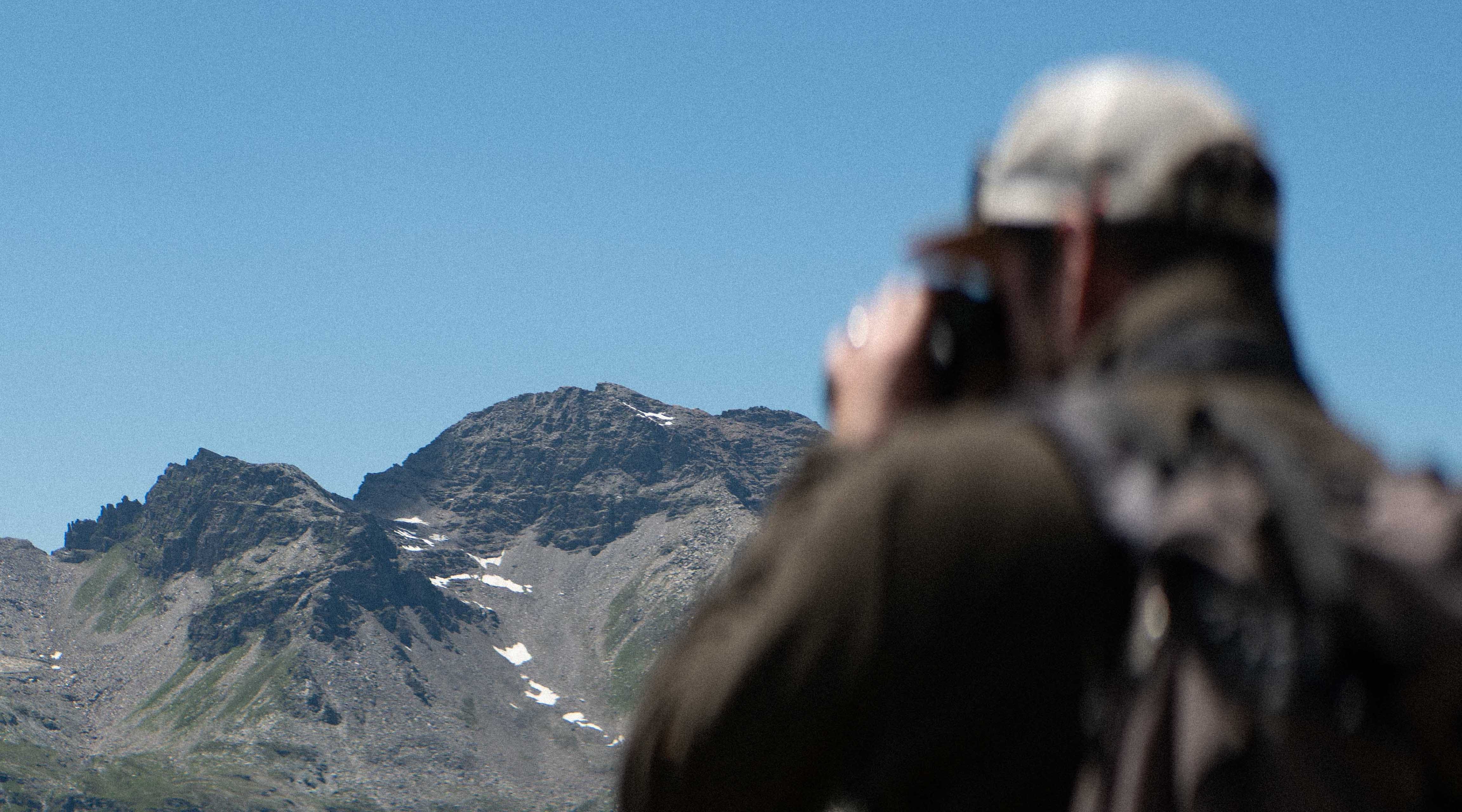
Today, I’m going to the Alp with family I’m filming with. He wants to take his son fishing on the lake, the location of which remains a mystery to me. This is something we had planned for a long time, and I cannot lie, I am attracted to it for precisely the same reason as those who film the eagle hunters. It is appealing, even exciting, to see such examples of continuity while much of the world has already been bulldozed and paved over.
Perhaps the attraction is in part because it contradicts the utter dullness of much of modern life as we know it. Yes, the fishing lines are made of plastic, but the core of it—a father and son going fishing together in a mountain range known by their family for generations, still carrying an ancient language—is timeless, ancestral.
But what the fuck am I doing here, really?
I feel I am searching for the antidote to my own sense of uprootedness through the rootedness of others.
There is nothing inherently wrong with it, only if the dynamic itself becomes extractive. Perhaps this is what disturbs me about those who travel to such places as Mongolia. The idea of parachuting in, “getting the shot” and exploiting it for maximum creative value is astoundingly similar to banking logic. A return on investment, not necessarily in finances, but in something more abstract and hard to measure, and with motives that are easier to conceal.
The bottom line, and the trap that is contained within it: there is value elsewhere that I can bring home, and it will benefit me in ways otherwise inaccessible. It’s the banker, the tourist, the explorer, the filmmaker, the writer. Different trades, the same temptation.
The fact that I am living here makes a difference. I am learning the language, I build relationships that are not transactional. Yet still, I’m confronted with the fact that the explorers who mapped these alpine peaks were the colonial, ruling class of Britain who stomped elsewhere across the world, planting their flags and staking claim. The reputation of the British in these valleys precedes those who come, however representative they were, or were not.
Yet still, we are bundled under one nation and that imposter syndrome remains. We are all inheritors whether we choose it or not. Be that land, nationality, language.
I have no desire to attempt to become a local. There is no need to pretend, and there is no need to deny where you came from, no matter how uprooted that may be. It wouldn’t be possible, anyway.
We cannot go back and going forwards seems equally precarious. But perhaps in meandering sideways—interwoven between languages, cultures, ways of seeing, something new can be born, and is being born. The alien plant doesn’t always become invasive.
The water laps against the shore. Alpine flowers in bloom, the midsummer sun high above us. That smell, I can never forget—particular to the high mountain terrain, the summer sweetness that comes and goes so quickly. I wonder if it intensifies to compensate for its short expression.
I’m watching the father and son, connected. Weaving fishing lines like they do every year. Our connection is not the same, but is no less strong. The invitation to be here with them is a sign of some sort of acceptance, of a mild adoption into a way of life different from my own.
A jet flies in the distance, seen but not heard. A fish is caught and let go. I’m not from here, but I’m no longer entirely a stranger.
Very evocative as usual.